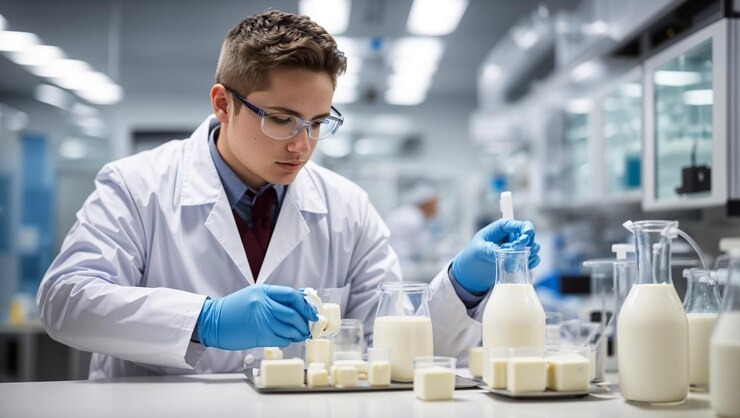

When you consume milk, cheese, yogurt, or any dairy product, you expect it to be safe, fresh, and nutritionally reliable. However, ensuring that level of quality is not accidental. Behind every trustworthy dairy product, there is careful scientific testing. A Milk Testing Laboratory plays a critical role in verifying the safety, purity, and nutritional integrity of dairy products before they reach consumers.
If you work in the dairy industry, run a food manufacturing facility, or supply milk-based products, you must understand how laboratory testing protects both your brand reputation and consumer health. By using advanced testing methods, laboratories ensure that your dairy products meet strict safety and quality standards.
Understanding the Role of a Milk Testing Laboratory
When you send milk samples for testing, you are essentially asking experts to evaluate the product at a microscopic and chemical level. A professional laboratory analyzes multiple aspects of the milk to determine whether it meets regulatory requirements and quality benchmarks.
A professional advanced Milk Testing Laboratory for dairy quality and nutritional analysis helps you verify that your products are free from harmful contaminants and meet expected nutritional values. These laboratories rely on scientific techniques such as protein analysis, microbial testing, and compositional analysis.
Without such testing, even small contamination issues could go unnoticed and potentially lead to health risks or costly product recalls.
Detecting Microbial Contamination
One of the primary responsibilities of a milk testing laboratory is identifying harmful microorganisms. Raw milk and dairy products can carry bacteria such as Salmonella, E. coli, or Listeria if proper hygiene and storage practices are not followed.
When you submit a sample, microbiological tests examine the presence and quantity of bacteria. These tests help determine whether the milk has been processed, stored, and transported correctly.
By detecting contamination early, you can prevent unsafe products from reaching the market. This proactive step protects consumers and prevents major financial and reputational damage to your business.
Verifying Nutritional Composition
Another key function of dairy testing is confirming the nutritional content of milk. Consumers rely on labels to understand the protein, fat, lactose, and mineral content of dairy products.
Laboratories use precise analytical techniques to verify whether your product actually contains the nutrients stated on the label. For example, testing can confirm the exact levels of milk proteins, fats, and other components.
Accurate nutritional verification not only helps maintain regulatory compliance but also strengthens consumer trust in your brand.
Identifying Adulteration and Fraud
Milk adulteration is a major concern in the global dairy industry. Some suppliers may dilute milk with water or add chemicals to artificially enhance its appearance or shelf life.
A milk testing laboratory helps you detect such adulteration. Advanced chemical analysis can identify substances such as detergents, urea, starch, or other unauthorized additives.
By identifying these issues, you can maintain product authenticity and prevent fraudulent practices from damaging your supply chain.
Ensuring Compliance With Food Safety Regulations
Food safety authorities across the world enforce strict regulations for dairy production and processing. If you operate in the dairy industry, you must demonstrate that your products comply with these standards.
Laboratory testing provides documented proof that your products meet regulatory requirements. Reports generated by testing facilities serve as essential records during inspections, audits, and certification processes.
With proper testing support, you reduce the risk of regulatory penalties and ensure smoother market approvals.
Monitoring Production Consistency
Even when your dairy products are safe, maintaining consistent quality is essential. Consumers expect the same taste, texture, and nutritional value every time they purchase your product.
Routine laboratory testing allows you to monitor consistency across batches. By comparing results from different production cycles, you can quickly identify variations in composition or quality.
This data-driven approach helps you improve your production process and maintain uniform product standards.
Supporting Research and Product Development
Milk testing laboratories are not only useful for quality control; they also support innovation. If you are developing new dairy products or improving existing formulations, laboratory analysis provides valuable insights.
Testing can reveal how different processing methods affect protein structure, fat content, and shelf stability. These insights help you refine recipes, enhance product performance, and deliver better dairy products to consumers.
Building Consumer Confidence
Consumers today are more aware of food safety than ever before. They want transparency and assurance that the food they consume has been tested and verified.
By using laboratory testing as part of your quality assurance strategy, you demonstrate a commitment to safety and scientific accuracy. This transparency strengthens your brand credibility and fosters long-term customer trust.
If you are looking for professional support with dairy testing and quality analysis, you can contact us today for professional milk testing laboratory services and expert dairy analysis to discuss your testing needs.
Conclusion
Ensuring the quality of dairy products requires more than careful production practices. Scientific testing is essential to verify safety, detect contamination, confirm nutritional value, and maintain regulatory compliance.
A milk testing laboratory provides the tools and expertise needed to evaluate dairy products at every stage of production. By incorporating laboratory testing into your quality control process, you protect consumers, maintain product integrity, and strengthen your reputation in the dairy market.
Ultimately, investing in professional testing is an investment in trust, safety, and long-term success for your dairy business.
FAQs About Milk Testing Laboratory
Why is milk testing important in the dairy industry?
Milk testing helps verify product safety, detect contamination, confirm nutritional content, and ensure compliance with food safety regulations. It protects both consumers and manufacturers.
What tests are commonly performed in a milk testing laboratory?
Common tests include microbial analysis, protein and fat composition testing, adulteration detection, and chemical residue analysis.
How often should dairy producers test their milk products?
Dairy producers typically conduct testing regularly during production batches to maintain consistent quality and ensure safety standards are met.
Can milk testing detect adulteration?
Yes. Laboratory testing can identify additives such as water, starch, detergents, or chemicals that may have been used to alter the milk composition.
Who should use milk testing laboratory services?
Milk testing services are beneficial for dairy producers, food manufacturers, research institutions, and regulatory organizations that need reliable dairy quality verification.